

The Removal of Black Musicians from the Story of Their Music
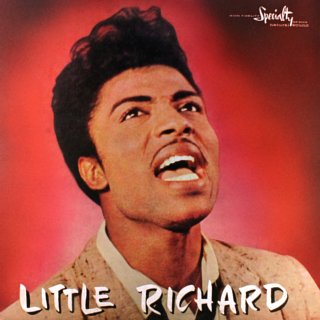
Image credit WikiMedia Commons
For many years, Black artists have fought to be credited for their contributions to the music industry. Black musicians have been the pioneers of many music genres we celebrate today, yet their contributions are too often overshadowed by their white counterparts, who have long profited from their creativity. Black artists have colored the soundscape of popular music, yet the roots of these contributions are too often forgotten, hidden behind voices that reaped the credit without a mention of their names.
The exploitation of Black music can be traced back to the early 1920s, the beginnings of the Great Migration, when Black people were escaping the Jim Crow South. Around the same time, thousands of Black recording artists contributed to what were called “Race Records,” music marketed to Black audiences. The Black musicians of these records laid the groundwork for gospel, jazz and blues, but their music wouldn’t reach the mainstream nor were they paid. During the Great Depression, many radio stations decided to hire white artists to cover Black songs because of their majority white audience, which negatively impacted the operations of Race Records.
Known for his “bouffant hairdo, black eyeliner and flashy clothes,” Little Richard–also known as Little Richie–released “Tutti Frutti,” in 1955. By the following year, “Tutti Frutti” reached its peak at no. 12 on the “Best Sellers in Stores” and no. 17 on “Most Played in Jukeboxes.” Little Richard stood out in a music industry dominated by white performers, offering a bold and unconventional presence that many audiences weren't used to. Despite his groundbreaking influence on artists like The Beatles, Elvis Presley and Bob Dylan, Richard’s own popularity was limited by the racial biases of the time. Pat Boone, a white rock and roll artist, gained widespread success by covering Little Richard’s songs—bringing them to white audiences who were more comfortable consuming Black music when filtered through a white performer. While Little Richard’s flamboyant image and energetic style challenged mainstream norms, Boone’s versions were seen as more palatable, highlighting the racial barriers that limited Black artists' visibility and recognition in the industry.
Little Richard wasn’t the only artist to experience this, as did Willie Mae “Big Mama” Thornton and countless other Black artists; this phenomenon was not an accident. It was intentional. Mark Montgomery French, a composer, writer and speaker explained that the erasure of Black people from rock ‘n’ roll was deliberate, “Since the rise of the recording industry, which began during segregation, labels sidelined Black artists while promoting white ones who borrowed their sounds and aesthetics.”
This trend continued as time passed. White artists continued to take and benefit from music by Black artists and perform them without giving the proper credit. The Beatles got their start as just a boy band, whose pop lyricism and melodies were commercial juggernauts, but lacking the critical angle that solidifies one as an artist. However with the establishment of Rolling Stone in 1967, the band would be enshrined as leading figures of rock n’roll. What helped the Beatles in this evolution was changing their sound, derived from the Black musicians' pioneering rock. In Elijah Wald’s Book “How the Beatles Destroyed Rock ‘n’ Roll,” Wald explores how John Lennon and Paul McCartney’s interests in the developing rock genre would be the foundation of the band being recast as serious rock artists rather than hollow pop crooners. Wald writes that Black musicians were “recast as the roots of rock'n'roll rather than as part of its evolving present.”
In a video essay by Alexander Avila, Avila finds that by appealing to the institutional voices that framed music critics, The Beatles turned rock into a white genre. By using Wald’s quote, “[The Beatles] took rock and roll, a historically African-American genre of music and made it more European,” Avila further concludes that using European musical styles such as the orchestral and classical arraignments, The Beatles’ version of rock was more reminiscent of a white style of music that was acceptable and digestible to the white gatekeepers of music.
Unfortunately this erasure is what would make rock valuable. According to Wald this process would carry greater implications for music that we still experience today–the clear racial demarcation in music listening and music value. Avila comments that as The Beatles debuted their rock music, Billboard re-instituted the R&B chart, a direct descendent of the original race records charts that separated Black musicians and listeners from white musicians and listeners. That’s a divide still clearly visible today with Black artists who are pigeonholed into RnB though they make pop music. Chloe Bailey spoke on this during a 2024 interview with Nylon Magazine, “Any music I do will easily and quickly be categorized as R&B because I’m a Black woman…If someone who didn't have my skin tone made the same music, it would be in the pop categories.”
The example of The Beatles and rock doesn’t just show how erasure and whitening of music removes Black musicians from their music innovations, but also how Black music is used to platform and further the careers of non-Black musicians. A contemporary case of this is Post Malone’s foray into country music after debuting as a hip-hop artist. He established himself as a hip-hop figure, while considering hip-hop to lack emotional and social depth. In a 2017 article for Uproxx, Aaron Williams uses Post Malone’s perspective on hip-hop to break down how hip-hop has been used as a tool by white artists to gain fame, while simultaneously nearly predicting Post Malone’s eventual shift from the genre. Williams claims that Post Malone was “he was merely playing the role in order to enjoy the cultural cachet and probably only really embraced ‘rap’ as a skill because it’s easier than proving guitar virtuoso or belting out stadium-rocking anthems.” Williams addresses how hip-hop was used as an entry point not to be taken seriously, but utilized to buy into a consumer base and facilitate music industry notoriety. It’s an example of how Black music and its aesthetics gain footing in mainstream music culture when removed from the Black identity that created the music in the first place.
Black musicians have laid the foundation for the music industry. Without their pioneering efforts we wouldn't have some of the rhythms or arraignments that we hear in music today. However, just as they’ve been marginalized in society, they’ve also been marginalized in the music industry. It’s through learning alternate histories of music that we can begin the process of attributing the right people their proper credit in shaping the contemporary music landscape we now live in.