

Concerts I Thought I’d Missed: Gov Ball 2026
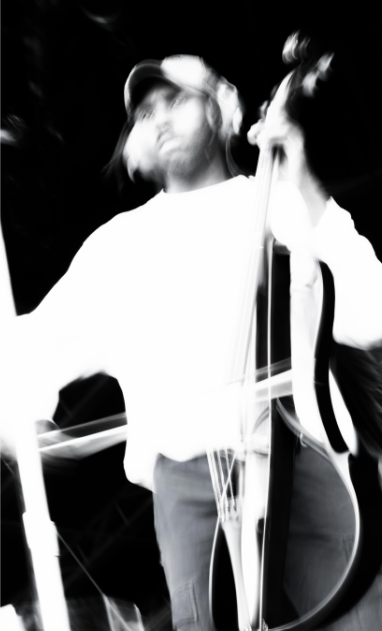
Image Credit: Jon Herrera/ig: jon._herrera
There’s nothing better than finally seeing artists you’ve missed seeing in the past. Every time I’ve seen a concert date too late, couldn’t get tickets or had a cancellation, I’ve told myself I’d see them eventually. And when somehow the universe responds to my wish, it feels like a sacred moment to see what you thought would never happen.
In the ever-changing complexities of the live music landscape, an artist touring right after an album usually certifies a tour. But, if you miss it, when will there be another tour or can you be assured if the next album will bring a tour. As musicians get further in their careers, touring becomes less assured or if there is a tour, possible limited dates. So, when I get another moment to experience what I thought I’d missed, it feels delicate.
After having her set canceled last year due to weather, Lexa Gates returned to Gov Ball this year on the main stage. A rising artist from Queens, Gov Ball was a hometown show for Gates. This was her first time back in the city after 30 days in Los Angeles, “there’s no place like home” she says with some dry humor.
It was just her on stage, moving across the long runway to engage with fans while giving herself space to focus. As Gates has risen as an artist, she’s been defining her imagery, which was clearly on display on the Verizon stage. The visuals for the performance showed a parking lot and a centered person in white clothing looping. On the top of the scene, her name was projected in calligraphy.
Gates has a deep edge to her voice, reminiscent of OG hip-hop artists like MC Lyte. And like the OGs, she raps in a slower duple rap style, different from the faster paced bars that have come to define hip-hop. She delivers her songs “Past It” and “Stupid” with a neutrality in face, but intention in her voice. Her delivery is pointed and at points cutting. Gates is an artist who raps and sings to bring attention to what she's saying rather than other external factors. It's why a minimalist approach to the stage works well for her performance. Her delivery, stage presence and minimal stage set up draw you into the Gates’ music.
The strength of Gates’ set is during the transitions to more melodic productions and jazz hip-hop. Though she slightly sings a little bit more during this arc, her rapping is more sensual and she seems to be in a flow. As a later part of her set, she also seems more relaxed. There’s something about the jazz music backings that seem to bring out another side of Gates, she harnesses her element.
In songs like “Latency” and “Angel,” Gates begins to move as if she’s recreating the scenes she’s rapping about. It brings a new dimension to her performance. Knowing how to bring dimension to her work isn’t unfamiliar to Gates. She went viral for performing in a glass box, which would set a new marketing trend across New York City. She knows what she has to do for attention, pushing and pulling at her authenticity while giving new ways to engage with an audience.
She ends her performance climbing onto a chair. It’s a fun intriguing end to her set, and a great opening to Gov Ball’s last day.
Sometimes albums and certain artists meet you at a certain time in your life. Blood Orange’s discography is one that’s brought me to meditation–processing what has yet to be given words.
Blood Orange’s set was initially canceled for the second day of Gov Ball, but without his return on the third day, I don’t think the festival would have been complete. His set was meditative, a reflection and release of what came in with us and may inevitably return, but now we are withstanding.
Blood Orange’s set is transcendent. He opens his set playing a cello, headphone on, in his own world. A focus on the live instrument has been an essential part of Blood Orange’s most recent performances. The choice is one that breaks through the heavy electronic instruments that have increasingly colored alternative music.
He sings “I am human and I need to be loved, just like everybody else does,” a cover of the Smith’s “How Soon Is Now?” The cello commands attention and maybe misdirects you think he’s going into an “Essex Honey” song, his most recent project that featured delicate string sections. However, Dev Hynes (Blood Orange) seemingly pulls a bait-and-switch on us, beginning “Saint.” It’s a beautiful transition.
Just as “Saint” stars, a voice plays, speaking on showing up in our full selves without fear controlling our humanity and how we should not limit ourselves to biology. It’s a fitting way to mark Blood Orange’s introduction. The songs featured throughout his set explore that struggle and tension of finding humanity in ourselves against the noise of society’s choking systems. Black-British and Guyanese, society’s perception is a constant weight in his music. This is clearly evident in “Charcoal,” discussing the “Negro Swan,” Hynes’ metaphor for the tender uniqueness of Black individuality intersected with Black depression.
Hynes’s set feels apt for this cultural moment. The disconnection marginalized identities feel with the progression of the current American society and emotions we must swallow to survive, yet in doing so is its own death. Hynes sings about observing people hiding their emotions, people-pleasing, playing roles that aren’t theirs and how it hallows them out. Yet, Hynes is only an observer and narrator, furthering questions of how much power we utilize for intervention.
So much of Blood Orange’s set feels like an embodied experience, a sacred space to bring your pressures and weights to throw away for a moment. The mixing of electronic instrumentals with real instruments feels especially affecting. While it shows Hynes’ multiplicity of talents, it’s a poignant point of sound that draws at us for different moments and Hynes knows exactly how to use melodies and harmonies to catch our emotions at the right angles.
Someone online says “all roads lead to [“Champagne Coast”].” A revered song among Blood Orange fans and indie-alt lovers, Blood Orange ends his set on a set. After all that processing, we dance. A song that elicits self-possession in the midst of what could break us, the song seeks for more. The song breaks are a dancefloor, it is freedom.